


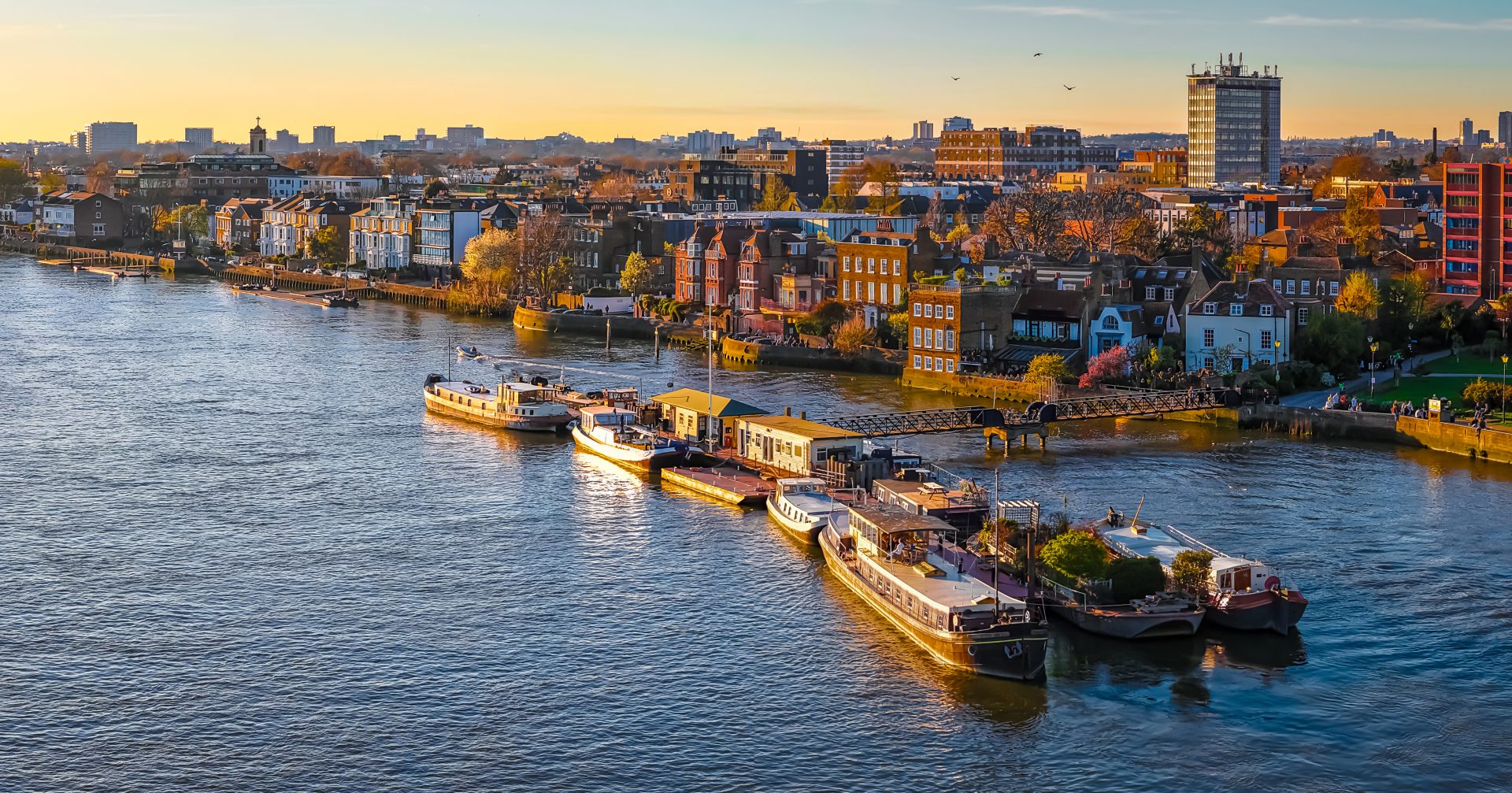
A different way to live on the water
Buying a houseboat in London offers a very different way of living in the capital.
Particularly along the Thames and in parts of South West London, a home on the water can combine a distinctive lifestyle with access to some of London’s most desirable neighbourhoods. For some buyers, a houseboat offers an alternative to a conventional apartment or townhouse. For others, it is a pied-à-terre, a weekend base or a more permanent change of lifestyle.
But buying a houseboat is not the same as buying a conventional property.
The boat itself is only one part of the decision. Buyers also need to understand the arrangements surrounding the mooring, the terms under which the boat can remain there, the ongoing costs of ownership and maintenance, and whether the relevant permissions and agreements support their intended use.
In some cases, the boat and the arrangements for occupying a particular mooring may be closely connected. In others, they may be entirely separate. A buyer should therefore establish exactly what is being acquired and what rights, if any, can continue following the purchase.
For anyone considering buying a houseboat in London, careful due diligence is essential.
Buying a houseboat: what are you actually acquiring?
One of the most important questions is also one of the easiest to overlook.
Are you buying the boat, the benefit of an existing mooring arrangement, or simply the boat itself?
A beautifully designed houseboat in an exceptional London location can be highly attractive, but the value and long-term practicality of the purchase may depend heavily on the arrangements governing where it is kept.
Buyers should not assume that a right to occupy a particular mooring automatically transfers with the boat.
The terms of any existing agreement, licence or contract should be examined carefully. Depending on the circumstances, a new owner may need approval from the mooring operator or other relevant party, or may need to enter into a new arrangement.
Understanding exactly what is being acquired should be a central part of the buying process.
Residential moorings and living aboard
If you intend to use a houseboat as your main home, one of the most important questions is whether the particular mooring and the arrangements surrounding it support residential occupation.
The answer will depend on the specific location and circumstances.
Buyers should establish the relevant permissions, planning position and contractual arrangements rather than relying solely on how a property or boat is described in marketing material.
Questions to investigate include:
- Whether the mooring is intended or permitted for residential occupation
- Whether there are planning or other permissions relevant to living aboard
- Who owns, manages or controls the mooring
- The terms and duration of any existing mooring agreement
- Whether the arrangement can continue following a change of ownership
- Whether the agreement can be assigned or transferred
- Whether the new owner must apply for a new agreement
- What restrictions may apply to the use of the boat
These are issues that should be clarified before committing to a purchase.
Mooring costs: looking beyond the purchase price
The purchase price of a houseboat is only one part of the financial calculation.
Mooring and berth costs can vary considerably depending on the location, facilities, services provided and the terms of the particular arrangement. There may also be additional costs associated with maintaining and operating the boat.
Depending on the boat and mooring, buyers may need to budget for:
- Mooring or berth fees
- Service charges, where applicable
- Electricity and water
- Insurance
- Maintenance and repairs
- Specialist survey costs
- Navigation licences or other vessel-related charges, where applicable
- Lifting, dry-docking or other specialist maintenance
- Waste and sanitation arrangements
- Council Tax or other local charges where applicable
The exact costs will depend on the individual boat and its location. They should therefore be established as part of the due diligence process rather than estimated solely by reference to the asking price.
Location matters just as much on the water
Location remains one of the most important considerations when buying a houseboat in London.
But on the water, location involves more than simply choosing a postcode.
Two moorings relatively close to one another can offer very different experiences. Buyers should consider not only the surrounding neighbourhood but also the practical realities of the specific location.
This may include:
- Access to transport and local amenities
- Parking and vehicle access
- Access to the boat itself
- Security and privacy
- Noise from roads, railways, bridges or river traffic
- The surrounding boating community
- Exposure to weather and changing river or water conditions
- The availability of utilities and services
- The day-to-day practicality of arriving at and leaving the boat
A mooring that feels peaceful on a summer afternoon may offer a very different experience during winter, periods of poor weather or at different stages of the tide.
As with any property purchase, understanding how a location works day to day is just as important as appreciating it at first viewing.
The condition of the boat
A houseboat may look and feel like a beautifully designed home, but its construction and condition remain fundamental to the purchase.
Depending on the type of vessel, buyers may need specialist advice on the condition of the hull or structure, as well as the systems that make the boat suitable for day-to-day living.
Areas that may require investigation include:
- Hull or structural condition
- Corrosion and deterioration
- Previous repairs or alterations
- Electrical systems
- Plumbing and heating
- Water and waste systems
- Mechanical equipment, where relevant
- Safety equipment and certification requirements
A specialist marine survey can provide an important assessment of the condition of the vessel and identify issues that may affect future costs, insurability or negotiations.
As with a building survey on a conventional home, the objective is not simply to identify defects. It is to understand the asset properly before committing to the purchase.
Finance and insurance
The financing of a houseboat can differ from the purchase of a conventional house or apartment.
The availability and structure of finance may depend on the nature of the asset being acquired, the type and construction of the vessel and the terms of any associated mooring arrangement.
Buyers should therefore establish early:
- What financing options may be available
- Whether conventional mortgage finance is appropriate
- Whether specialist marine finance may be required
- What deposit or security requirements apply
- What insurance is available
- Whether a recent specialist survey is required by a lender or insurer
Addressing these questions early can help avoid becoming committed to a purchase before the practicalities of financing and insuring it are understood.
Buying a houseboat on the Thames in South West London
For buyers looking for a houseboat in South West London, the appeal is clear.
Living on the Thames or close to the river can offer a combination of outdoor space, a strong sense of community and a completely different perspective on London living, while remaining connected to established neighbourhoods and the wider capital.
However, the market can be relatively opaque.
Opportunities may not always be widely marketed, and comparing the value of one houseboat with another is not as straightforward as comparing conventional residential property.
The value of a particular opportunity may depend on a combination of factors:
- The condition, design and specification of the boat
- The location of the mooring
- The security and terms of the mooring arrangement
- The costs associated with remaining there
- The practical quality of life offered by the location
- The availability of comparable opportunities
Each stretch of water, mooring and individual boat should therefore be assessed on its own merits.
Why due diligence matters
The most attractive houseboat may not necessarily be the best purchase.
A buyer may fall in love with the design of the boat or the appeal of a particular location, while overlooking issues that could have a significant impact on long-term enjoyment, future costs or flexibility.
This is where the same principles that apply to any significant property acquisition become particularly important.
Before proceeding, buyers may need to understand:
- Exactly what they are acquiring
- The ownership and condition of the boat
- The status and terms of the mooring
- Whether the intended use is supported by the relevant arrangements
- The likely ongoing costs
- Any planning, contractual or other restrictions
- The practical implications of the location
A houseboat purchase may involve a different set of questions from a conventional property transaction, but the principle is the same: the better the information available before committing, the better placed a buyer is to make an informed decision.
How Middleton Advisors can help
At Middleton Advisors, our role is to represent the interests of the buyer throughout the acquisition process.
The starting point is understanding exactly what a client is looking for. For someone considering a houseboat in London, that may mean identifying the right stretch of water, the right neighbourhood, a particular type of vessel or a very specific lifestyle.
We then apply the same principles that underpin every Middleton search: independence, diligence and local knowledge.
Our role can include:
- Understanding and refining the brief
- Identifying suitable on- and off-market opportunities
- Researching the location and surrounding environment
- Assessing value and comparable opportunities
- Investigating the practical arrangements surrounding the boat and mooring
- Coordinating appropriate specialist advice and surveys
- Identifying issues that may not be apparent from an initial viewing
- Advising on negotiations and purchase strategy
- Supporting the transaction through to completion
Where specialist legal, marine, financial or technical advice is required, we can help clients build the appropriate professional team around the purchase.
Middleton’s buying service is built around uncovering opportunities, carrying out detailed research and due diligence, advising on value, leading negotiations and supporting clients from search through to completion.
A different type of London property purchase
Buying a houseboat can be one of the most rewarding ways to live in London.
It can offer space, character and a lifestyle that conventional property cannot easily replicate.
But it is a purchase where the details matter.
The boat, its condition, the location, the arrangements for the mooring and the practicalities of long-term ownership all need to work together.
For buyers considering a houseboat on the Thames or elsewhere in London, careful research and the right advice can help ensure that an exceptional lifestyle purchase is also a well-informed one.
To discuss buying a houseboat in South West London, speak to our local advisor, Rhianne McIlroy.